


I love brogues, from tables and shoes they fascinate me and so many others… for such a long period of time. Stumbling across Emily Harrison’s brogue shows at New Designers this year was a great treat especially to hear from her about the process she has gone through to create these goods.
A vegetarian for all of her life and environmentally-conscious, Emily set about to create a brogue shoe which was friendlier to the environment removing the chromium that is part of the tanning process. You can read about this and more in the conversation that I had with Emily recently…

Atelier Tally: Your project is called ‘The Alternative British Brogue‘, which takes the traditional brogue design and remanufactures it in order to craft the shoe in a more sustainable way, both in quality and in processes. Where did this initial interest come from?
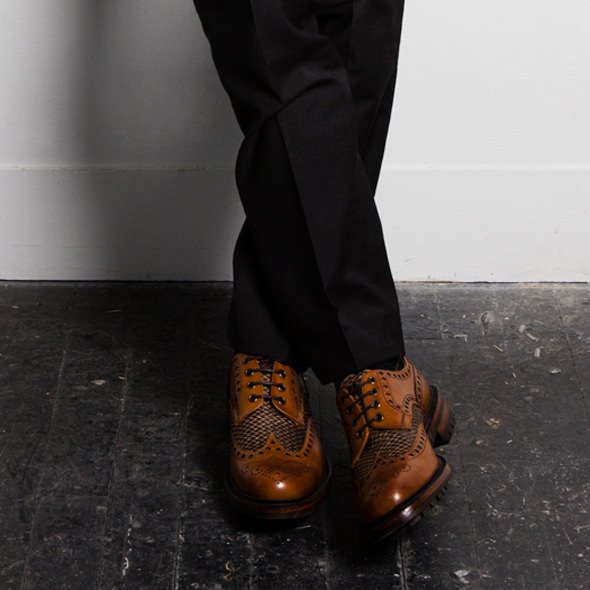
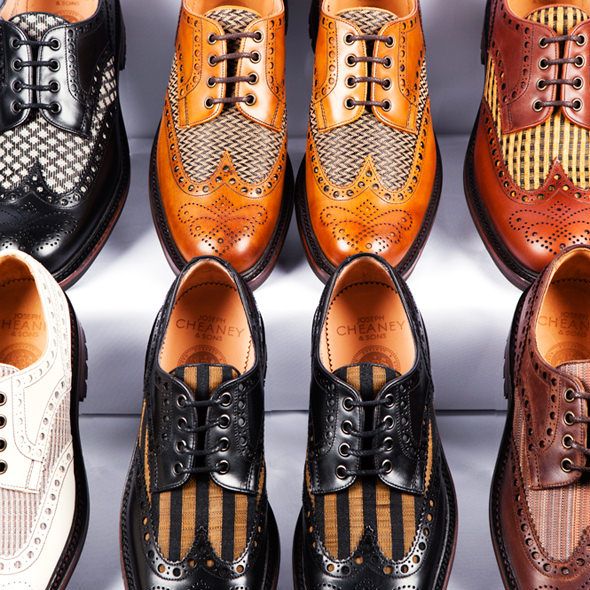
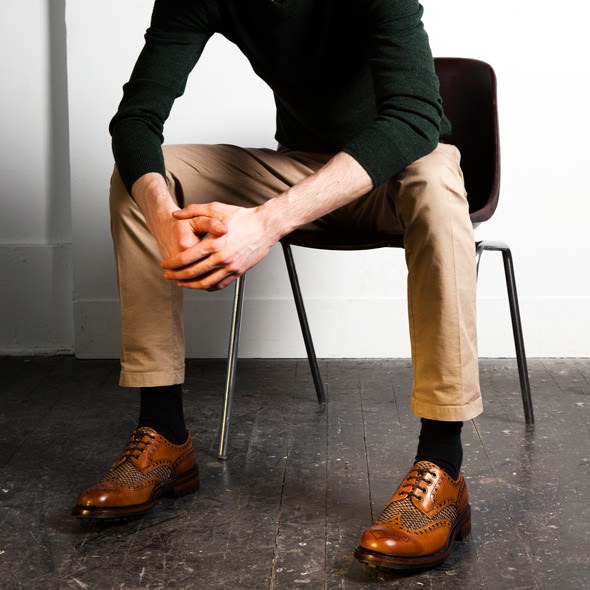
Emily Harrison: The Alternative British Brogue explores alternative production processes of leather. The designs utilise traditional shoe making techniques, sustainable materials, such as horsehair, and a completely new tanning technology, which bypass the chromium-based process. The result is a stylish re-take on the classic brogue, which is sustainably and conscientiously made in Britain.
The new range of brogue designs promote the idea that today’s designers, manufacturers and consumers need to realise the implications of throw-away, fast-fashion culture we find ourselves in. The sustainable designs of the brogues go hand-in-hand with the recent design and manufacturing movement against fast-fashion.
I have been increasingly interested in sustainable manufacturing, materials and processes for some years now. I have a passion for creativity, aesthetics and innovation.
From a young age I was aware of the impacts of our individual decisions as consumers and valued the earths resources. Being brought up as vegetarian in a family who are environmentally conscious and who recycle wherever possible has influenced my own design decisions and ethos. As designers we have a responsibility to design conscientiously and treat the material components of fashion with greater reverence.
I have always loved fashion, it excites and inspires me, however it wasn’t until last summer when I realised that it was the footwear and accessories industry that I wanted to be positively involved in. This was when my real enthusiasm for footwear and accessories began.
Atelier Tally: You say that you have been a vegetarian for all of your life, but you are now making leather shoes. Is your choice to be vegetarian based on other reasons than cruelty to animals?
Emily Harrison: I was vegetarian growing up for the simple reason that my parents were and so we didn’t have meat in our house. I do believe in animal rights and eat free-range/organic animal products where ever possible, however, one material that has played a fundamental role in the history of fashion is leather, from leather shoes to leather jackets. Leather is a durable, natural product which is able to breathe, a perfect material to wear against our skin. Footwear tends to be made from leather, which is usually made from cow hide. Cow leather is usually a by-product from animals farmed for other uses like food.
I used a quote recently for the same question: “..hides are a by-product which has to be dealt with…over time it has become clear that leather is one of the best ways to deal with this by-product…as a result leather is an elegant solution to the management of a by-product retaining for the use of society a durable, technically clever natural material with multiple end uses and outstanding characteristics.” (Mike Redwood 2012).
Atelier Tally: I recently met you at New Designers during the judging process and we were all very impressed by the presentation of your project and brand. Is the idea to now launch this as a smaller leather brand to sell through stores or do you have other plans for your brand Duty Design?
Emily Harrison: I plan to put ‘Duty Design’ on hold for a few years, in order to get a better understanding and experience in the industry first hand and to gain insight into how the business works. I think it would be a wise choice to understand the business and its structure before I launch my own brand. Once I have the knowledge to yield the best results and have financial security I will then be able to launch my own products to market.

Atelier Tally: There were questions during New Designers as to whether this project is ‘development’ rather than ‘design’ as we know the Brogue design well. This created a lot of discussion within the judging team about what ‘design’ actually means. What is your view on this?
Emily Harrison: I think design is very diverse. There is good design and bad design and for good design to be achieved there needs to be the development process. Development can be seen as design, because design is a process and development is a process that results in better design.

Atelier Tally: You funded this project through Sponsorcraft raising just under £2000, which is an incredible achievement and an extremely clever move that allowed you to produce the leather goods to a very high quality that is almost ready for market. Was it important for you to present this project in this way rather than scaling back your ambitions to a more achievable level that you could fund yourself?
Emily Harrison: Sustainability is not just about the environment; there is a need for economic sustainability as well. I saw Sponsorcraft as a way to underpin the economic sustainability of my own work.
I am an ambitious individual; I dream big and work hard. For me to achieve what I had planned I knew I needed financial assistance, so I decided I would raise the money I needed for my graduate collection. In my final year at university it was crucial to be organised and planned and I had planned everything at the right time in order for my projects to come together successfully. The key to a successful project is having belief, enthusiasm, and determination and being able to plan!
I invested a lot of time and effort into my project and would never have scaled it back to a more ‘achievable level’ as I had sheer determination and belief that it was all going to come together the way I had imagined. It was very important for me to present my project in such a professional manner.

Atelier Tally: You mention the statistics “65% of the worlds production of leather is estimated to go into leather footwear and approximately 90% of the leather manufactured is tanned using chromium”. Throw-away culture appears to be important to you when designing, will you always look at design from this point of view or was it just leather tanning that concerned you?
Emily Harrison: Waste and over-consumerism should be issues of public concern; the implications of fast-fashion and throw-away culture do not stop there. Everyone involved in the fashion industry is responsible for the consequences of fast-fashion, but the move towards change must begin with those who hold the most sway. At the foundation of the move towards sustainability is education. The importance of consumer and corporate awareness is invaluable and cannot be overstated. Knowledge dictates choice and choice dictates so much in the world of consumerist fashion. Education must be a central force in the movement towards a solution.
The French philosopher Sartre once wrote that “we are our choices”. What he was trying to show is that choices are important – not only important but essential – to who we are and to what we are to become. As educated designers we make choices and I choose to continue to look at design from a sustainable angle.
Atelier Tally: Finally, what is next for Duty Design and Emily Harrison? What are you largest ambitions and how are you planning to get there?
Emily Harrison: I plan to help revolutionise sustainability and materials within the footwear and accessories industry. Whilst working in the industry I plan to gain as much knowledge and insight into the business of fashion, so that I am educated, and am able to yield the best results when I launch my own products to market.


Interesting article and an important message. Not enough people know that cheap leathergoods come at a huge cost to the environment. I use vegetable tanned and hand waxed bridle for my bags so like Emily’s shoes, they are never going to be the cheapest but are ecologically sound. Vegetable tanned leather also develops the most beautiful patina with age and should last a lifetime, Deborah http://www.doeleather.co.uk
A great message.. Not enough people know that cheap leather is finished with toxic heavy metals. I only use vegetable tanned and hand waxed bridle leather for my bags because like Emily, I want my products to be safe and not to harm the environment. Naturally tanned leather also happens to be the most durable and beautiful, improving with age.
Wishing you every success Emily,
Deborah http://www.doeleather.co.uk
Completely agree. Great to hear other stories about this, I’ll have to investigate more.