

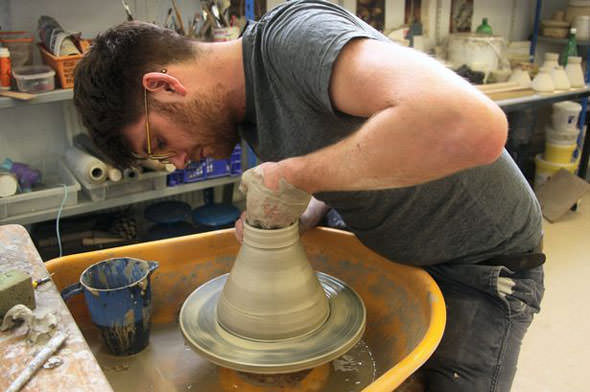
With the New Designers show over for another year, I was keen to take a look at previous winners and the success that they have had since winning the award.
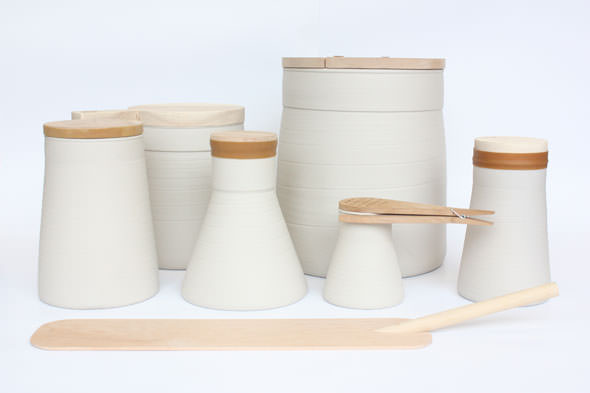
Joseph Hartley won the prestigious New Designer of the Year Award in 2012. His designs are now stocked at FAO, Yorkshire Sculpture Park and Ferrious.
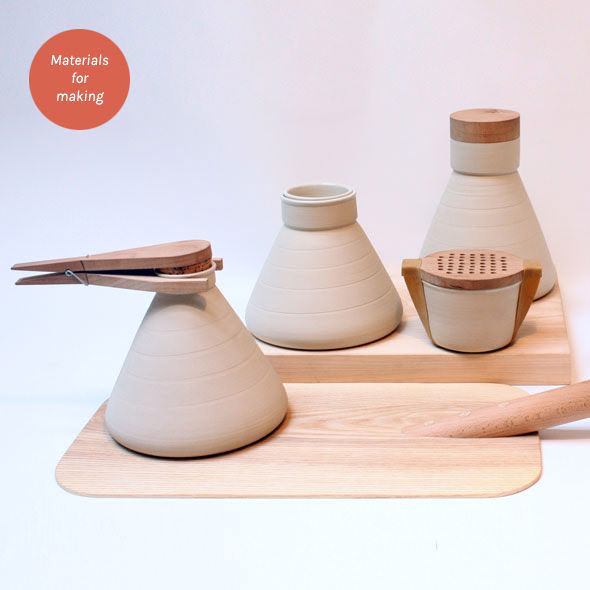
“I design and hand make thoroughly usable objects from the simplest materials, using simple techniques. The results are objects that are pure and honest which feature virtually no decoration or surface treatment. My products are hard wearing, playful and are intended to be used a lot and enjoyed a lot.” says Joseph of his work. The judges of last year’s awards agreed completely adding that “Joseph has a passion for functionality and innovation without compromising his craft. The connection between Joseph and his work enhances its and integrity.”
I took some of Joseph’s valuable time to talk to him about the last twelve months and his future…
ATELIER TALLY: Almost one year on from the New Designers show that saw you win the prestigious award. How has the year treated you?
Joseph Hartley: It’s been just the most amazing year since New Designers last year, the opportunities that have come my way have just been incredible. And the exposure I got from the show was better than any graduate could ever wish for. Especially the campaign they ran for this years event which focused on past winners, and featured myself on the cover of the flyers and poster, I can’t thank the guys at New Designers enough for that.
AT: New Designers does have a history of doing that for designers but it is great to hear it happening.
AT: With a varied background as a butcher, then a baker and a designer-maker, how has this background informed your design decisions?
JH: The jobs I’ve held in the past and my background have been paramount in influencing my current work. I spent years working around lean, stark, industrial equipment in various food jobs and I think you can see a direct connection to my current work, you certainly wouldn’t find any decoration on a meat mincing machine, just as you wouldn’t on one of my ceramic bottles.
I’ve always made things with my hands and these early jobs were a kind of temporary output for me, I don’t really see to much of a difference between what I did before and what I do now, ingredients, materials, they’re both the same.
AT: You create usable objects which are simple in design and materials. Are there any designers that have inspired you?
JH: I’m certainly inspired by designers and makers that revolve their work around the materials, and let their materials speak out. I’ve been especially influential by Benjamin Hubert, Formafantasma, Atelier NL and Michael Marriot.
Portrait © Paul Simpson
AT: Does your design aesthetic continue in to your design of clothing? Are they very simple, using as little materials as possible to sit alongside the kitchenware?
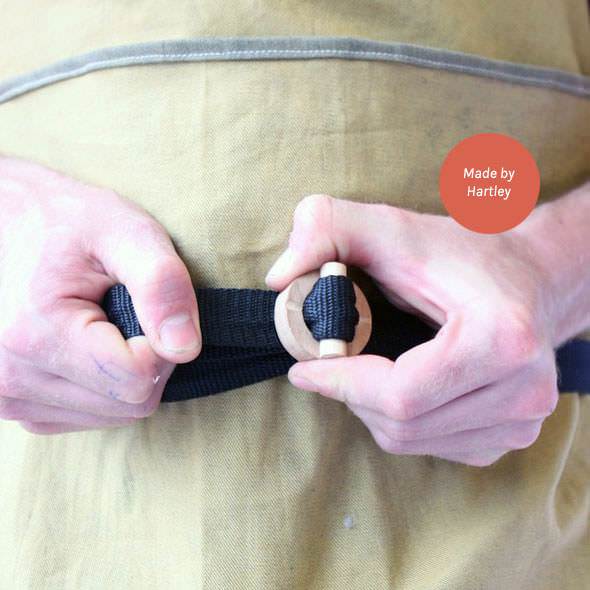
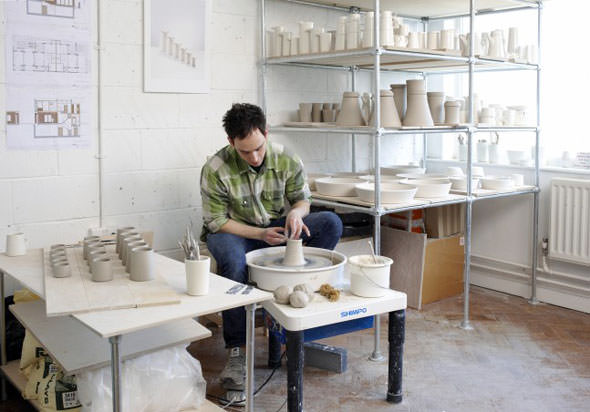
JH: The clothing I make most certainly follows the same ethos as my other work. So often hand maker’s like myself are defined by the material they work in, and I’ve always tried to avoid this definition, I rather like the idea that I could be defined by a aesthetic, or an ethos rather than a material. This allows me to throw pots on a wheel, without actually being a potter.
The cloth I use to make my clothes is very important, I like using fabric that has had a history. I’m currently making garments from a old Litchfield canvas tent my dad gave me, it has beautiful faded colours that you simply couldn’t go out and buy. As I work my way through the tent the scrap pieces are becoming smaller and smaller and I’m having to work harder to create things from it, its nearly all gone.
AT: Is there was one object that you own which you could choose as your favourite item, clothing or homewares or other? Or if that is too tricky, then a number of objects?
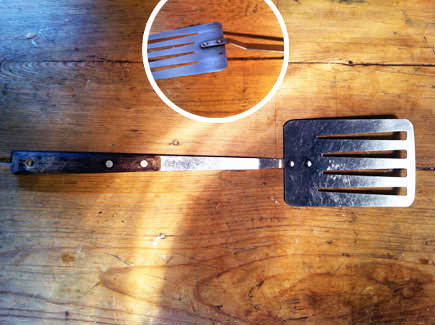
JH: I have a lot of stuff. Favorite objects come and go, but one object that I continue to love is my old Prestige spatula, made in Sheffield of course. I use it all the time and it has never broken. the flex is just right, the wooden handle just gets better with age. The front edge is straight rather than curved which makes thins a lot better. This is a quality item.
AT: If there is one thing that has surprised you the most from setting up your own studio, what would you say that was?
JH: The thing I’m most surprised about after setting up my own studio was the breadth of objects I’ve found myself making. Once you start displaying your own work and people see it, they see your ability to construct and manufacture. I get people and companies coming to me to make things for them which is great, I love doing those kinds of things. I’ve recently made some giant camera bellows for somebody, a set of awards for a ceremony in Manchester and I’m currently working on a time capsule as a commission for a property development company.
AT: That sounds like a good variety of work and you have just completed an exhibition about the process of your work. Has this changed the way in which people view your objects and the skill involved in producing them?
JH: I think it has changed the way people view my work, it allowed me to show the depth of it and also show how transferable the skill I have as a maker is. I’ve recently started a project with a graphic designer to produce an object for the market, he saw the show and got straight in touch because he wanted to work with me.
AT: That project sounds exciting, we’ll keep an eye out for it. So, as your exhibition was about the process of designing, what is the process that you go through when producing any of your designs?
JH: My design process begins with testing really, or playing with materials, but it nearly always starts in 3D before exploring it further in 2D.
The beginning is often inspired by an object that I might come across on a daily basis, or an activity I might do.
I think I allow my objects to evolve rather than designing them. I rarely sit down with a piece of paper and think ‘right , gotta design something, what’s its going to be’. I just make and make and make and make and I think and design as I’m doing it. ‘Thinking (or designing) through making’ is a phrase I like.
AT: That sounds easy but you clearly have a raw talent for designing which allows you to make beautiful objects without even trying. I’m looking forward to seeing more products from you.

Leave a Reply