


Let me start by saying that, despite popular demand, Thonet is not pronounced ‘Tho-nay’ as it might be if Michael Thonet were French however the German-Austrian cabinet maker pronounced his name as ‘Ton-et’ with a hard beginning and ending with the T.
Now on to the chair, the famous coffee house chair which became an icon and is considered to be the most successful mass produced product in the world, even more than the Polyprop chair by Robin Day.

During the 1850s, Michael Thonet developed and perfected his technique of bending solid wood and became the first time serial furniture producer, and thus became the No. 14 chair (or the 214 chair as it is no known). But it wasn’t just this process which made it a huge success, it was the distribution model which added to this: 36 disassembled chairs could be packed into a one cubic meter box, shipped throughout the world, and then assembled on site. And all of this long before Ikea was even a twinkle in Ingvar Kamprad’s eye.

The chair is made of six pieces of steam-bent wood, 10 screws, and two nuts. The wooden parts are made by heating beechwood slats to 100°C, pressing them into curved cast-iron molds, and then drying them at around 70°C for 20 hours. This process also meant that the chairs could be mass-produced by unskilled workers and disassembled to save space during transportation.

With his invention of bentwood furniture, Thonet laid a cornerstone in industrial production methods. More than 865,000 bentwood chairs were produced per year in today’s Czech Republic, Hungary, and Russia totalling 50 million chairs between 1859 and 1930. After Michael Thonet’s death in 1871 his sons took over running the company and during the 1930s created some iconic tubular steel furniture, but we’re not here to talk about that.

As part of a collobration between Japanese retailer Muji and Thonet, designer James Irvine revisited the chair design in 2009 to create a version of the bentwood chair. “It was so interesting to ‘find’ the table for the ‘No. 14′. Totally old and totally new,’ Irvine told Architonic. This allowed Irvine to consider how the two pieces work together and this resulted in the horizontal panel across the back at the height of the table top.


Today, 5th generation Peter Thonet, is running the family company and working with renowned contemporary architects and designers such as Claudio Bellini, Stefan Diez, Naoto Fukasawa, Hadi Teherani, James Irvine, Glen Oliver Löw, Lepper, Schmidt, Sommerlade. They continue the work of Michael Thonet and the established company that he created more than 160 years ago.
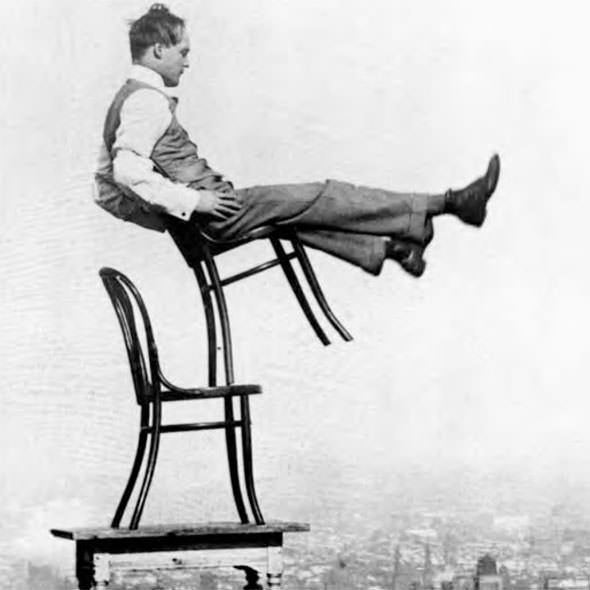
Designer: Michael Thonet
Manufacturer: Thonet
Year: 1859
Price: £545 from Nest.co.uk


These Thonet chairs are really a piece of art. This looks great and thus can go with any location. These were discovered by Michael Thonet in 1859, but are still loved across the world.
I am looking to replace the circular bottom brace on a wood Thonet chair. It is approximately 15″ in diameter and about 7/8″ thick. Can you tell me where I can purchase this item please? I would be most grateful for your help in this matter.
Fred Sawyer
I’m afraid I don’t know but you could contact Thonet directly at http://en.thonet.de/contact/contact-form.html and see if they can help.