

Lately, I’ve been looking much more at sustainability and longevity in design. I don’t really know what has renewed my interest but I would think it has something to do with surrounding myself in products which are made to last.
This is not just another design blog, another blogger critiquing industrial design and designers; I look for the stories behind objects, to find out what really makes a product great, and usually the battle is won if the values of the product are rooted in sustainability.
Since I wrote the blog post ‘Buy right, buy once‘ I have been thinking about this a lot. I sadly replaced my wallet of 12 years after making a strong point that I wished not to, but I was drawn like many of us towards the shiny zips of a Comme des Garcons wallet putting my older wallet away to parade around the new kid in my pocket.
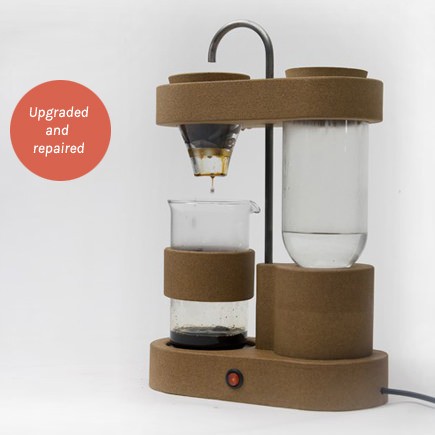
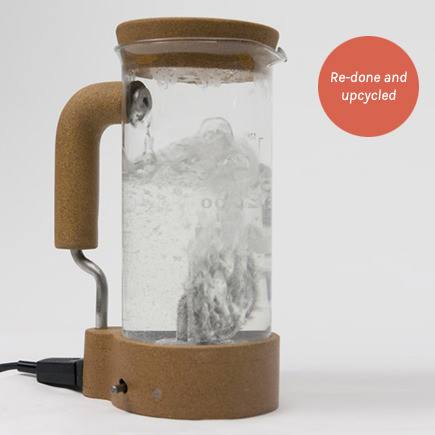
But this only deepened my interest in to finding way NOT to throw away my products which lead me on to Re-Done appliances by Gaspard Tiné-Berès.
Cheap household appliances such as kettles, coffee makers or toasters, are typical of goods that are thrown away while in perfect working order. But, even when damaged, the electrical components unlike the casing are easily fixable; therefore, landfill sites are increasingly becoming sources of viable and perfectly working complex electrical and electronic components. Moreover, these same components represent a major waste problem, due to their composite and toxic nature.
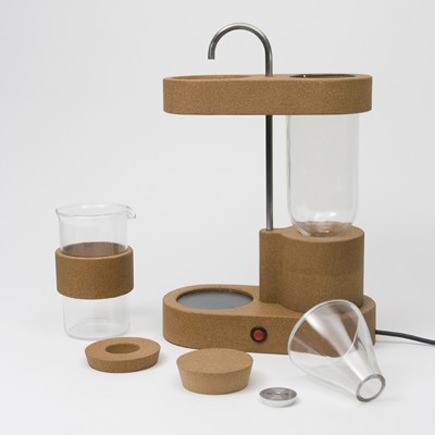

Re-Do studio have been investigating a business model based on the exploitation of such resources, starting from the existing solutions such as re-use centre and are proposing a system that would bring together concepts such as local manufacturing, re-skilling of European labour and up-cycling in order to produce a range of electrical devices with a new aesthetic and extended life, that could be produced with simple and low cost tooling solutions.
Their coffee-maker, kettle and toaster are made out of re-used components and factory-seconds glassware such as wine bottle and chemistry beakers, in order to take advantage of it’s ubiquity, and standardised dimensions.
The main structure is made out of natural cork for it’s waterproof, anti-bacterial and insulation properties. Moreover, cork can be recomposed in order to utilize all the off-cuts. This design required no mould and can be frequently upgraded, repaired or changed as required.
“For me a product’s aesthetic is derived from it’s function and context: I’m passionate about how products are manufactured, traded and most of all how they are used. I value simple utilitarian products for daily use more than overtly expressive designs.”
Gaspard Tiné-Berès
Now Gaspard has set up shop at a re-use centre in London with a long-term friend Tristan Kopp to create Re-Do studio who aim to create products using waste materials which have a value of their own. Remember when Muji launched their ‘unbranded’ goods to remove the desire of an object based on the label attached to it… this is the real deal although I imagine that if they are successful these cork products will take on their own aesthetic value and become symbols of sustainable status for all to show-off.
Who cares though, if it reduces waste then this is the perfect marriage.
To end, I wanted to show you a short film about electrical waste… if you ever wanted to feel guilty about replacing your toaster, this film will do it. Oh yes, let’s all feel guilty about pointless waste and consider this when we’re about to upgrade a perfectly good product. It’s a great little film that shows the Re-Do studio work in action so we don’t have to feel quite as bad…
Designer: Re-Done appliances
Year: 2012


1 Comment